Eleven candidate nations have been assessed as potential founding members of the Treaty of Kibuye. Each briefing covers the nation's economic profile, governance structure, treaty qualification status, anticipated treaty benefits, diplomatic considerations, and implementation notes.
Member State Briefings
Data currency notice. Economic figures and political assessments in these briefings reflect conditions at the document date (2023–2024). Leadership names, governance assessments, and economic indicators may not reflect current conditions. Each individual briefing carries the same notice.
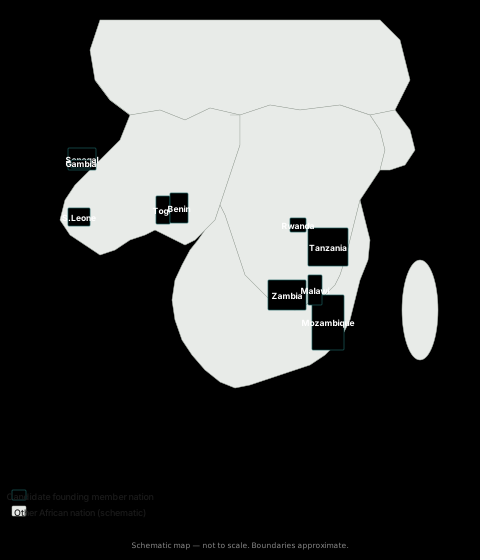
Summary
| Nation | Region | GDP per capita | Population | Primary economic character | Biometric ID coverage |
|---|---|---|---|---|---|
| Benin | West Africa | $1,370 | 13.3 million | Agriculture (cotton), port services | ~80% |
| The Gambia | West Africa | $825 | 2.5 million | Agriculture, tourism, fisheries | ~70% (in development) |
| Malawi | Southern Africa | $642 | 19.1 million | Agriculture (tobacco, tea, sugar) | ~95% (achievable) |
| Mozambique | Southern Africa | $535 | 33.2 million | Natural gas, agriculture, mining | ~70% |
| Rwanda | East Africa | $950 | 13.6 million | Services, agriculture, IT | Fully implemented |
| Senegal | West Africa | $1,550 | 17.7 million | Services, fishing, oil and gas | ~90% |
| Sierra Leone | West Africa | $485 | 8.6 million | Mining (diamonds, iron ore) | ~60% (in development) |
| Tanzania | East Africa | $1,260 | 65.5 million | Agriculture, mining, tourism | ~85% |
| Togo | West Africa | $980 | 8.7 million | Port and logistics, phosphates | ~85% |
| Zambia | Southern Africa | $1,120 | 20.2 million | Copper mining, agriculture | ~85% |